
A first bounty feels like it should arrive quickly. You read a few writeups, install a handful of tools, and start poking at a program. Three weeks later you have submitted nothing — or you got a polite "not applicable" and a note about scope. Nearly every hunter goes through this. The ones who stay are rarely the most talented; they just stopped making the same seven mistakes.
The scope is not paperwork. It is the line between authorized testing and unauthorized access, and it decides whether your finding gets paid or gets you removed from the program. Read the entire policy before you send a single request: in-scope assets, out-of-scope assets, rate limits, banned techniques, whether automated scanners are allowed, and any required header or test account.
Wildcards are the usual trap. A program listing *.example.com may exclude the apex domain, may not cover a product on a different top-level domain, and almost never includes a third-party service the company merely uses. If the policy names an exception, treat it as absolute.
Testing outside an authorized scope can have legal consequences. No finding is worth that risk.
If you only test what the homepage links to, you are competing with everyone who did the same thing in ten minutes. Bugs tend to sit in forgotten places: staging subdomains, older API versions, admin panels behind a login, mobile endpoints the web app never calls.
Recon is not one tool run. It is a habit of building an inventory and revisiting it. A workable loop:
Every hunter has pasted scanner output into a report and hoped. Triagers spot it immediately, and a trail of false positives follows your username. A tool flags a pattern; it does not prove impact.
Learn the vulnerability class before you automate it. If a scanner reports a possible injection, your job is to confirm the parameter, craft the minimal proof, and explain what data an attacker could actually reach. The same applies to template scanners, directory brute-forcers and anything else that produces a wall of URLs. Automate the boring parts — enumeration, fuzzing, diffing — and keep your judgement for verification.
Reflected XSS on a marketing page is heavily hunted and often pays little. Broken access control and logic flaws are the opposite: quieter, hard to automate, and frequently rated high or critical.
These bugs live in the flow, not in the payload. Create two accounts, place a real object in one, and check whether the other can read or modify it by changing an identifier. Then attack the process itself:
A useful rule: if a feature has a rule a human wrote ("only managers can approve this"), there is likely a bug where the code forgot to enforce it.
Two problems kill more reports than anything else: the bug does not reproduce, and the bug has no impact. Before you write anything, reproduce it in a clean session, on a second account, or in a different browser. Then ask what an attacker gains. If the honest answer is "not much", it belongs in your notes, not in the program's queue.
Reports commonly closed as informational include missing security headers on their own, self-XSS, version disclosure with no working exploit, and email configuration issues with no demonstrated abuse. They are not always wrong; they are simply not vulnerabilities by themselves. Impact is the product you are selling.
The triager is your reader and your only advocate inside the program. Make their job trivial. A report that takes four passes to understand gets triaged last, or gets misread.
Check the program's requirements too — rating system, mandatory fields, language. Matching the format they asked for is part of the work.
Bug bounty pays out skill with a delay. The first weeks are mostly reading, mapping and closing dead ends. Hunters who quit usually did it alone, jumped between ten programs, and measured themselves by payout instead of progress.
Pick two or three programs and learn them properly: their stack, their features, their history of disclosed reports. Keep notes on every dead end so you do not repeat it. Track hours spent and techniques learned rather than money earned in month one, and take breaks — staring at the same endpoint for six hours produces worse thinking than walking away for twenty minutes.
None of this needs rare talent. It needs a routine: read the scope twice, build an asset inventory before testing, verify manually before reporting, and write every report for a reader who is short on time. Do that for a few months and you will overtake most of the hunters who started beside you. The bugs are there. The discipline is what finds them.
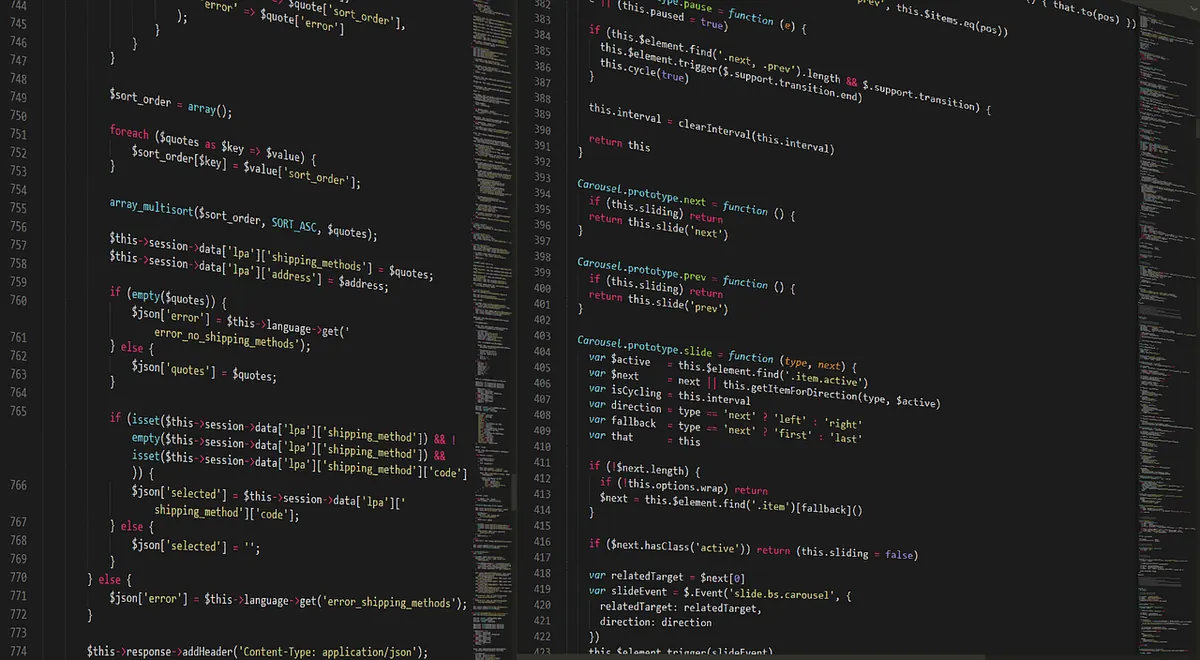
Photo: geralt / Pixabay

CVSS turns a vague severity opinion into a defensible number. Here is how the metrics work, how to build a vector,...

A practical roadmap for leaving a salaried IT security role for full-time bug bounty, covering skills, track record,...

A step-by-step build of a Subfinder, httpx and Nuclei recon pipeline — install, script, filter the noise, and...

Notes from the front lines of bug hunting.
